 Save
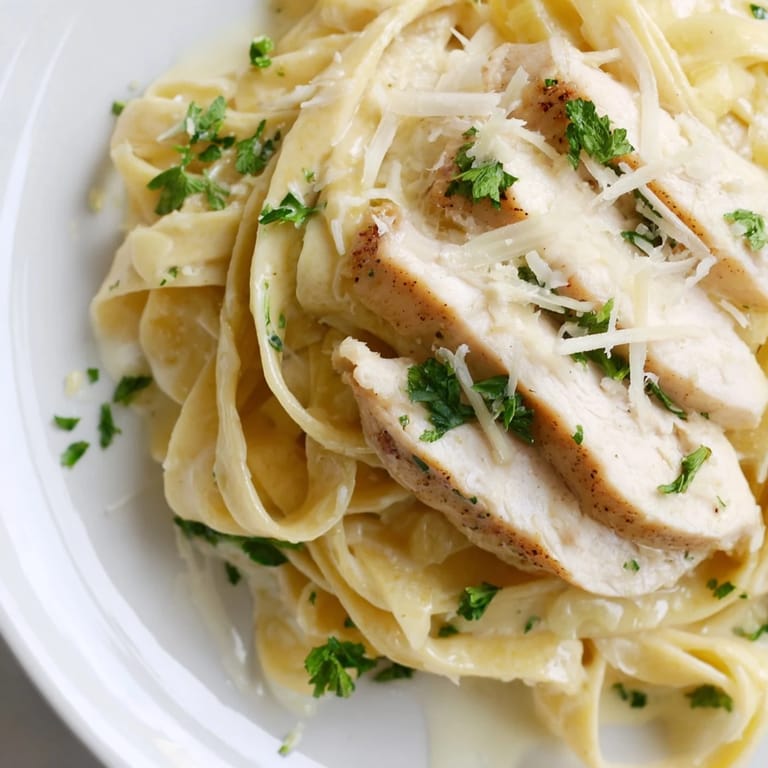
Save There's something almost magical about the moment when butter and cream come together in a pan and transform into something luxurious. I discovered that magic on a Tuesday night when I had three hungry people at my table and thirty minutes to feed them. Fettuccine Alfredo became my salvation that evening, not because it's complicated, but because it's honest—just a few good ingredients that somehow become greater than themselves. The sauce clings to each ribbon of pasta like silk, and suddenly you're not just eating dinner, you're having an experience.
I remember cooking this for my roommate's boyfriend on their first dinner at our place together—I was nervous until that first bite of creamy, peppery pasta made him close his eyes and smile. That moment told me everything I needed to know about the power of this dish. It doesn't need to be complicated to be memorable.
Ingredients
- Fettuccine pasta, 400 g: The wide ribbons are essential because they hold the sauce better than thinner shapes; use fresh if you can find it, but dried works beautifully too.
- Unsalted butter, 60 g: This is your base, so use real butter—it's non-negotiable for the silky texture.
- Heavy cream, 250 ml: Don't skimp here; this is what makes the sauce luxurious without breaking or getting grainy.
- Freshly grated Parmesan cheese, 120 g: Pre-grated cheese has anti-caking agents that prevent a smooth sauce, so grate it yourself while the pasta cooks.
- Garlic clove, 1 (optional): A whisper of garlic adds depth; mince it finely so it cooks evenly and won't create sharp little bites.
- Salt and freshly ground black pepper: Season as you go rather than all at the end—it builds flavor layer by layer.
- Nutmeg, a pinch: Just a hint brings the whole sauce into focus, adding warmth that people can't quite identify.
- Chicken breasts, 2 (optional): If you're adding protein, choose breasts that are roughly the same thickness so they cook evenly.
- Olive oil, 2 tbsp: Use this for sautéing chicken to prevent sticking and build a light golden crust.
- Fresh parsley and extra Parmesan for garnish: These finishing touches matter more than you'd think—they signal care and add freshness to each bite.
Tired of Takeout? 🥡
Get 10 meals you can make faster than delivery arrives. Seriously.
One email. No spam. Unsubscribe anytime.
Instructions
- Start the pasta water first:
- Fill a large pot with salted water—it should taste like the sea. Bring it to a rolling boil before you add the fettuccine so it cooks evenly and gets that slight resistance (al dente) that makes it tender, not mushy.
- Cook the fettuccine:
- Add the pasta and stir it immediately so nothing sticks to the bottom. Follow the package instructions but taste it a minute before they suggest—you want it to still have a tiny bit of firmness in the center. Reserve a cup of starchy pasta water before draining; this liquid gold will help you adjust the sauce consistency later.
- Sear the chicken (if using):
- While the pasta cooks, pat the chicken breasts dry with paper towels and season generously with salt and pepper. Heat olive oil in a large skillet over medium-high heat until it shimmers slightly, then add the chicken and let it sit undisturbed for 6-7 minutes until the bottom is golden—don't move it around. Flip and cook the other side the same way, then transfer to a cutting board and let it rest for 5 minutes before slicing thin.
- Build the sauce foundation:
- In a large pan over medium-low heat, melt the butter slowly without browning it. If you're using garlic, add it now and let it sauté for just 30 seconds until the aroma fills your kitchen, then stop right there before it turns bitter.
- Bring in the cream:
- Pour in the heavy cream and stir constantly for 2-3 minutes, bringing it to a gentle simmer. You'll see it begin to thicken slightly and feel the warmth intensify; this is the point where everything becomes tender and welcoming.
- Add the Parmesan gradually:
- Reduce the heat to low and whisper the cheese in a little at a time, whisking constantly so it melts smoothly rather than clumping. This patience is what separates a creamy sauce from a broken mess—it only takes a few minutes and changes everything. Season with salt, pepper, and just a pinch of nutmeg, tasting as you go.
- Toss it together:
- Add the drained fettuccine to the sauce and toss it gently with tongs so every strand gets coated. If it feels too thick, add the reserved pasta water a little at a time—remember, it continues to thicken slightly as it sits.
- Plate and finish:
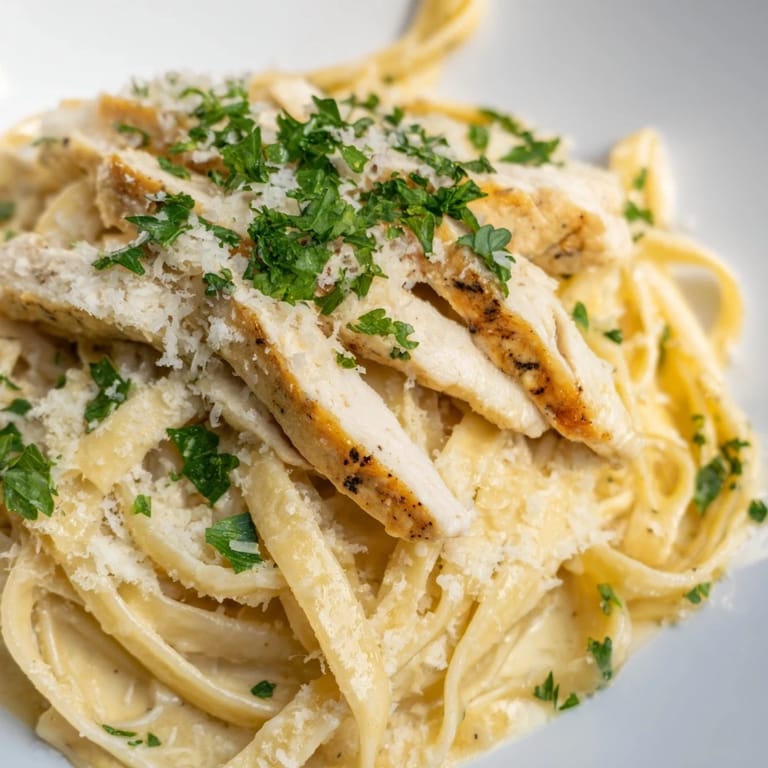
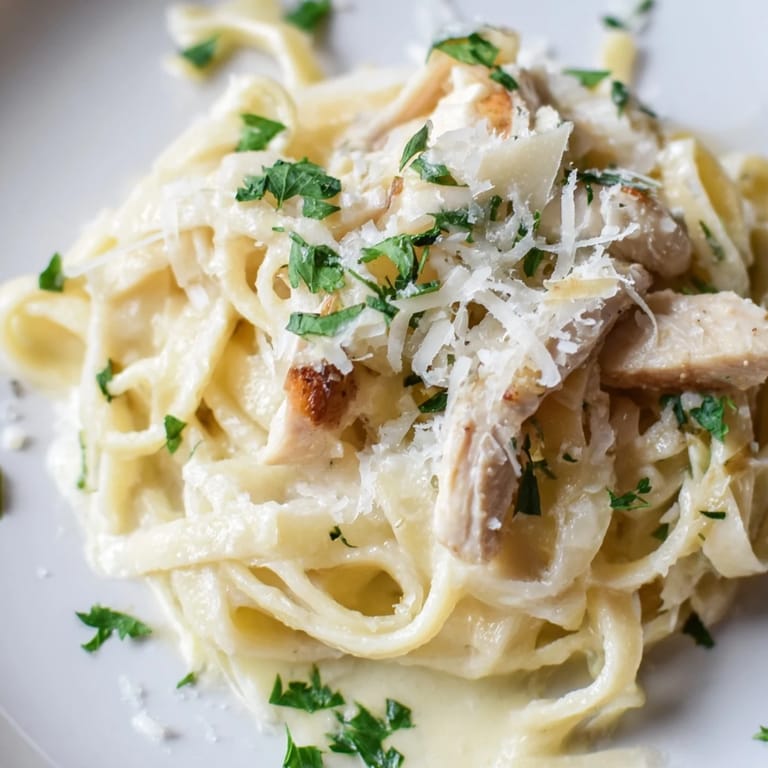
- Transfer to bowls or plates immediately, top with chicken if you made it, then scatter fresh parsley and extra Parmesan over everything. Serve right away while it's warm and the sauce is still silky.
 Save
Save Years later, I served this to my daughter's soccer team after an early morning game, and watching twelve hungry kids devour it in minutes taught me something profound: simple food shared generously is what people remember. This dish isn't about impressing anyone—it's about nourishing them.
The Science of Creamy Without Cream (Well, Mostly)
The magic here isn't actually magic—it's emulsion. Parmesan cheese contains an amino acid called serine, which acts as a natural emulsifier, binding the fat and liquid together into something silky rather than greasy. Understanding this changed how I approached the dish; I stopped being afraid of the butter and cream and started respecting them. Temperature is your friend because it keeps everything suspended rather than broken.
Variations That Keep It Interesting
I've added everything from lemon zest to crispy bacon, fresh peas to sautéed mushrooms, and I've learned that Alfredo is actually incredibly flexible when you treat it as a canvas. The key is not to overcrowd the sauce—one or two additions work beautifully, but too many start competing. My personal favorite is a small handful of torn fresh spinach stirred in at the very end so it just barely wilts into the warm sauce.
Wine Pairing and Timing Tips
Serve this with a crisp, light Italian white wine—something like Pinot Grigio or Vermentino cuts through the richness beautifully and cleanses your palate between bites. The whole meal comes together in thirty minutes, but here's what I've learned: set your table, pour your wine, and get your guests seated before you even heat the pan. This dish demands your attention for those final few minutes, and you'll want everyone ready the moment it hits the plate.
- Have your bowls or plates warming in a low oven so the pasta stays hot longer.
- Slice the chicken against the grain for maximum tenderness and easier eating.
- If you make this for a crowd, the sauce reheats gently on very low heat—add a splash of cream if needed—but fresh is always better.
 Save
Save Fettuccine Alfredo taught me that sometimes the most satisfying meals come from respecting simple ingredients rather than trying to complicate them. It's a reminder that good cooking is often just paying attention.
Recipe Questions & Answers
- → How can I achieve the perfect sauce consistency?
Gradually whisk in Parmesan cheese over low heat and use reserved pasta water to adjust the sauce to a silky, smooth consistency without thinning it excessively.
- → Can I add protein to the fettuccine?
Sautéed chicken breasts seasoned and sliced thinly make a delicious addition, adding heartiness without overpowering the creamy sauce.
- → What alternatives can enhance the flavor?
Adding sautéed mushrooms or peas provides extra texture and an earthy note that complements the richness of the sauce.
- → Is there a substitute for Parmesan cheese?
Pecorino Romano can be used for a sharper, saltier flavor that adds a different but delightful twist to the sauce.
- → How do I prevent the sauce from separating?
Maintain gentle heat during cooking and stir constantly when adding cream and cheese. Avoid boiling once cheese is added to preserve a creamy texture.