 Save
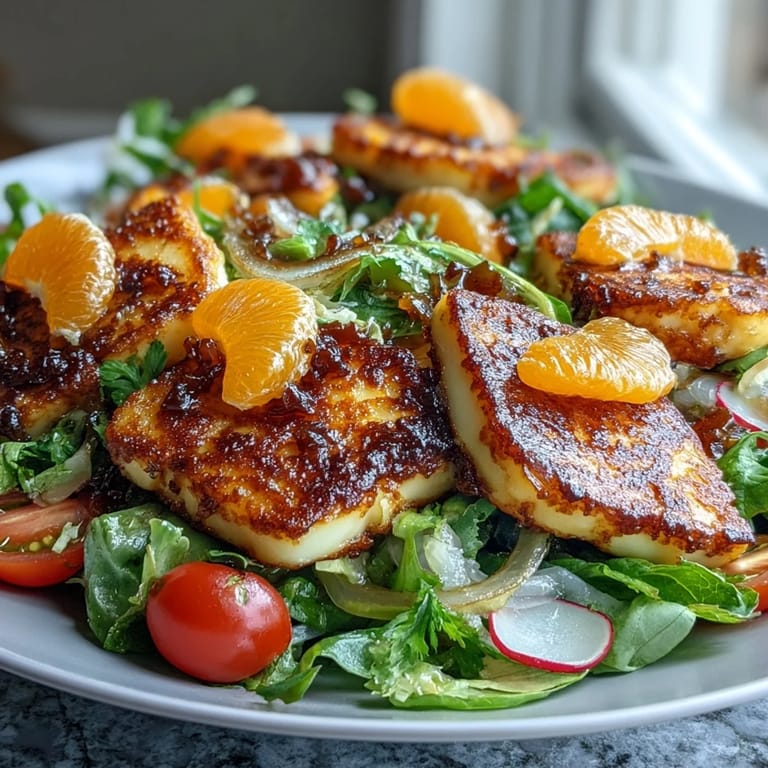
Save Blood oranges caught my eye at the market one winter afternoon, their deep crimson skin practically glowing under the fluorescent lights. I bought them on impulse, imagining something warm and unexpected, and by evening I'd assembled this salad in my head—golden halloumi squeaking between my teeth, that citrus brightness cutting through the richness, all anchored by crispy bread and a tangy sumac dressing that tastes like the Middle East in a bowl.
I served this to my partner on a quiet Thursday night when we were both tired of the usual rotation, and watching him taste it felt like I'd cracked some kind of code—his eyes lit up at that first combination of warm cheese, cold citrus, and that peppery kick from the arugula. It became our go-to salad whenever we needed something that tasted both simple and sophisticated.
Ingredients
- Halloumi cheese, 200 g sliced into 1 cm thick pieces: This is the star player—it has a high melting point, so it gets gorgeously golden without turning into a puddle, and that slight squeak between your teeth is part of the charm.
- Blood oranges, 2 peeled and segmented: Their deeper color and subtle tartness make them special compared to regular oranges, though you can absolutely swap in whatever citrus you have on hand.
- Mixed salad greens, 150 g (romaine, arugula, parsley, mint): The parsley and mint do more than fill space—they add herbaceous brightness that bridges the gap between the warm cheese and bright citrus.
- Cucumber, 1 small diced: This keeps things fresh and adds a crisp coolness that balances the fried halloumi beautifully.
- Cherry tomatoes, 8 halved: Choose the ripest ones you can find; their sweetness rounds out the acidic dressing.
- Red onion, ½ small thinly sliced: A little goes a long way—it adds sharpness without overwhelming, so don't skip the thin slicing.
- Radishes, 2 thinly sliced: They bring a peppery crunch that echoes the fresh herbs and keeps the salad from feeling one-dimensional.
- Sourdough bread, 2 thick slices cut into cubes: The tang in sourdough actually complements the sumac and pomegranate molasses, so resist the urge to use regular bread if you can help it.
- Olive oil for croutons and dressing, 5 tbsp total: Use a good extra virgin oil for the dressing where you'll taste it directly, but regular olive oil works fine for toasting the bread.
- Sea salt and black pepper to taste: These aren't afterthoughts—they season each element properly and let the other flavors sing.
- Lemon juice, 1½ tbsp fresh: Fresh is non-negotiable here; bottled juice tastes thin and tinny by comparison.
- Pomegranate molasses, 1 tbsp: This ingredient changed my life—it's tart and complex, and you'll find yourself looking for excuses to use it in everything once you taste what it does to a simple vinaigrette.
- Sumac, 1 tsp: A Middle Eastern spice that's lemony and slightly tangy; it's not a substitute for salt or lemon, but rather its own flavor that adds sophistication and visual appeal.
Tired of Takeout? 🥡
Get 10 meals you can make faster than delivery arrives. Seriously.
One email. No spam. Unsubscribe anytime.
Instructions
- Toast the sourdough until it's golden and crispy:
- Preheat your oven to 200°C (400°F), toss your bread cubes in olive oil and a pinch of sea salt, spread them out on a baking tray, and let them go for 8–10 minutes until they're deeply golden and you can hear them crackle when you handle them. This step takes barely any time but makes all the difference—soggy croutons will ruin the whole vibe.
- Fry the halloumi until the edges turn golden:
- Heat a non-stick skillet over medium heat and place your halloumi slices in without crowding the pan—you want room for them to brown properly, not steam. Let them sit for 2–3 minutes per side until they develop a gorgeous golden crust, then transfer them to a paper towel to drain off excess oil while they're still warm and slightly pliable.
- Build your salad base:
- In a large bowl, combine all your greens, diced cucumber, halved cherry tomatoes, thinly sliced red onion, radish slices, and blood orange segments—this is where you're building flavor and texture layers that will all come together when the dressing hits. Don't worry about it looking perfect; a little visual messiness actually makes the final salad more appealing.
- Whisk together the dressing:
- In a small bowl, combine your extra virgin olive oil, fresh lemon juice, pomegranate molasses, sumac, black pepper, and sea salt, whisking until the molasses dissolves and everything comes together into a cohesive, slightly emulsified dressing. Taste it—this is where you adjust; if it's too tart, add a touch more oil, and if it needs more personality, a pinch more sumac will do it.
- Bring everything together:
- Add your fried halloumi and crispy croutons to the salad bowl, drizzle with your dressing, and toss gently so you don't break the halloumi or crush the croutons. The warmth of the cheese will slightly wilt the greens and help the dressing coat everything evenly.
- Serve immediately while the halloumi is still warm:
- This salad is best eaten right away, while the cheese is still yielding and the croutons haven't softened. If you let it sit too long, the croutons will lose their crunch and the halloumi will firm up again.
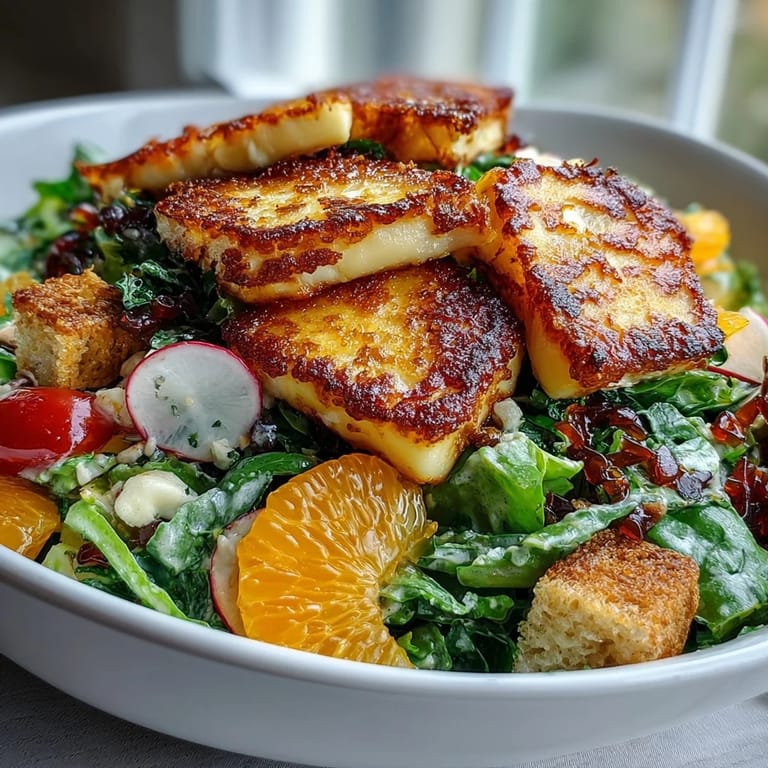 Save
Save There was this moment when a friend tasted this salad for the first time and said, "This tastes like a place I want to visit," which is exactly what I'd been hoping for—that each bite would transport you somewhere, feel like more than just dinner. That's when I realized the magic wasn't in any single ingredient but in how they all convinced each other to be better.
The Halloumi Technique
Getting the halloumi right is everything here, and the secret is patience and medium heat. I learned this the hard way after trying to rush it on high heat and ending up with a greasy, brown exterior and a still-cold interior. Medium heat lets the outside develop that gorgeous golden crust while the inside softens just enough to give way under your fork—you're not melting it into oblivion, just coaxing it to a perfect tender state where it still holds its shape but gives you that slight squeeze when you cut into it.
Why This Salad Works as a Meal
Most salads feel like an appetizer or a side, but this one has enough protein from the halloumi, enough fat from the olive oil and cheese, and enough carbs from the bread that it actually fills you up. The combination of warm and cool, crispy and soft, rich and bright creates a complete eating experience—your mouth never gets bored, and you don't finish the plate wishing you'd made something more substantial.
Scaling and Substitutions That Actually Work
This recipe is forgiving in the best way possible, letting you work with what's in your kitchen and what's in season. If blood oranges aren't available, regular oranges work fine, or even pink grapefruit if you want something more tart and dramatic. The beauty is that the dressing and the halloumi are strong enough to hold things together no matter what citrus you use, and honestly, I've made this with whatever greens I had on hand—spinach, lettuce, fresh herbs—and it's always been delicious.
- Add toasted pistachios or walnuts for extra crunch and a subtle richness that complements the pomegranate molasses.
- Pomegranate seeds make a colorful and tangy garnish that adds bursts of flavor and visual pop to every bite.
- If you can't find sumac, a combination of lemon zest and a touch of ground cumin will approximate the flavor, though sumac is truly worth tracking down at a Middle Eastern market or online.
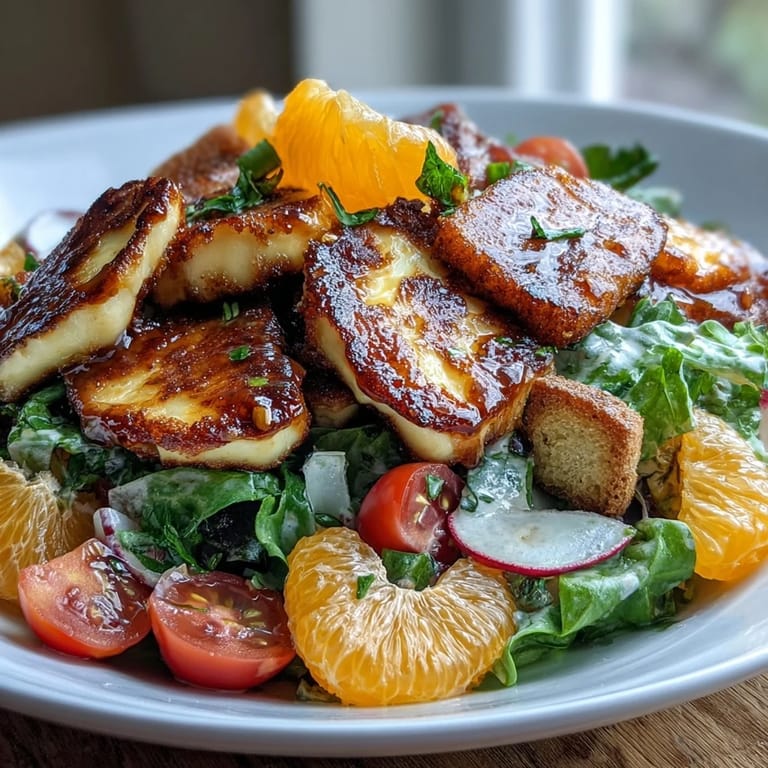 Save
Save This salad has become my answer to the question "What should we eat?" when I want something that feels special but not complicated. It's the kind of dish that reminds you why you love cooking in the first place.
Recipe Questions & Answers
- → What makes fattoush different from other salads?
Fattoush is a Middle Eastern salad characterized by crispy croutons and a tangy sumac-based dressing. The combination of fried halloumi and blood oranges adds unique protein and citrus elements.
- → Can I prepare this ahead of time?
Prepare the dressing and croutons up to a day in advance. Fry the halloumi just before serving and assemble immediately for optimal texture and temperature contrast.
- → What can I substitute for halloumi?
Paneer, firm feta, or grilled chicken breast work well. For a vegan option, use extra-firm tofu marinated in the dressing before pan-frying.
- → How do I prevent croutons from getting soggy?
Add croutons and fried halloumi just before serving. Store them separately from the dressed vegetables if making ahead, then combine at the last minute.
- → What's the purpose of pomegranate molasses?
Pomegranate molasses adds deep tangy sweetness and balances the salty halloumi. If unavailable, reduce pomegranate juice with a splash of lemon and honey.
- → Can I use regular oranges instead of blood oranges?
Yes, regular oranges or pink grapefruit work beautifully. Blood oranges offer striking color and slightly berry-like notes, but the dish remains delicious with substitutions.