 Save
Save My mum still talks about the year I attempted her lemon drizzle cake from memory, armed with nothing but determination and a vague recollection of golden crumbs. The kitchen smelled incredible—sharp citrus cutting through the warmth of butter and sugar—and when I poked those first holes into the still-warm sponge, watching the glaze sink in like it was meant to be there all along, something clicked. That cake became the thing I'd make every Mother's Day after, though now I've learned the tricks that turn a good cake into one that makes people close their eyes after the first bite.
There's a specific memory I carry of bringing this cake to a Mother's Day lunch where my sister's friend mentioned she'd been craving something 'properly lemon,' and watching her face when she tasted how the drizzle had melted into every corner of the crumb—that's when I realized this wasn't just a cake recipe, it was a small edible love letter you could actually make happen in an afternoon.
Ingredients
- Unsalted butter, 225g and softened: Cold butter won't blend smoothly with the sugar, so let yours sit on the counter while you gather everything else—this step is where the cake's tender texture begins.
- Caster sugar, 225g: Its fine crystals dissolve faster than granulated, creating that pale, fluffy mixture that's the foundation of a perfect sponge.
- Eggs, 4 large and at room temperature: Cold eggs resist blending and can cause the batter to split; set them out when you start prepping.
- Self-raising flour, 225g: This does the heavy lifting for rise, so measure it by spooning into your cup rather than scooping straight from the bag to avoid compacting.
- Lemon zest from 2 unwaxed lemons: The oils in the zest are where all that vibrant flavor lives, so use a microplane and don't skip this—it's the difference between good and unforgettable.
- Whole milk, 2 tbsp: This keeps the crumb tender and prevents the cake from drying out as it sits, a lesson learned through slightly sad, crumbly attempts.
- Salt, a pinch: It sounds minimal but it's the quiet hero that makes the lemon sing instead of screech.
- Lemon juice from 2 lemons and icing sugar, 125g: When mixed together, this becomes a glaze that's tangy enough to matter—taste it and adjust the sugar if your lemons were particularly juicy.
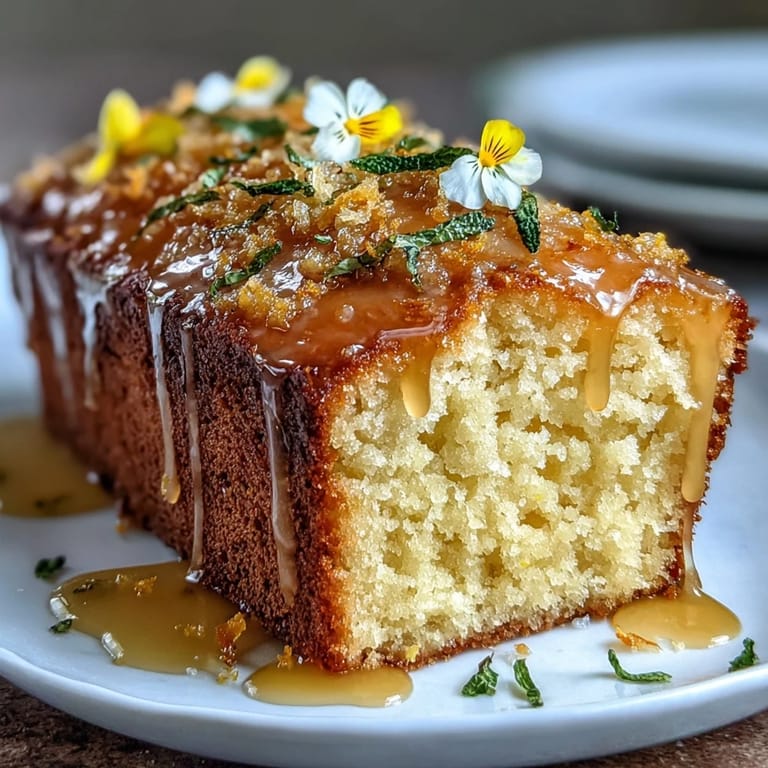
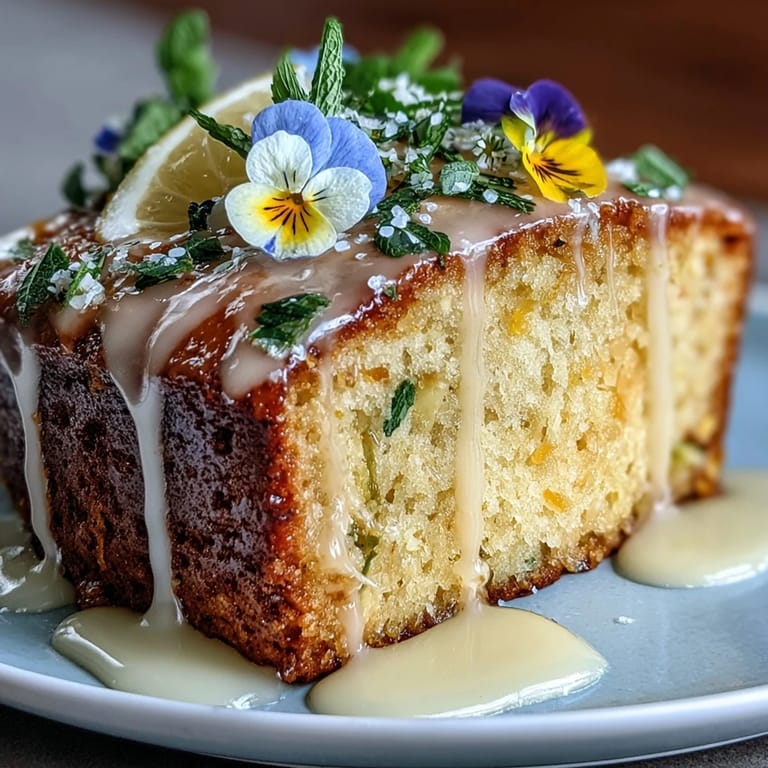
- Edible flowers for decoration: Violas, pansies, nasturtiums, and rose petals are lovely choices, but confirm they're pesticide-free and marked safe for eating before you buy them.
Tired of Takeout? 🥡
Get 10 meals you can make faster than delivery arrives. Seriously.
One email. No spam. Unsubscribe anytime.
Instructions
- Set the stage:
- Preheat your oven to 180°C (160°C fan, 350°F) and prepare a 900g loaf tin by greasing it generously and lining with parchment paper—this prevents any sticking drama later on.
- Build your base:
- Cream the softened butter and caster sugar together in a large bowl, beating until the mixture is pale, fluffy, and noticeably lighter in color; this usually takes around 3 to 4 minutes with an electric mixer.
- Introduce the eggs gently:
- Add eggs one at a time, beating well after each addition so everything stays emulsified and smooth rather than curdled and sad.
- Fold with care:
- Add the self-raising flour, lemon zest, milk, and salt all together, folding gently with a spatula until just combined—overworking this step develops gluten and toughens your cake, so resist the urge to over-mix.
- Into the tin:
- Pour the batter into your prepared tin and use a spatula to level the top so it bakes evenly.
- Bake until golden:
- Bake for 40 to 45 minutes, until a skewer inserted into the center comes out clean and the top is pale golden; the kitchen will smell absolutely incredible during this time.
- Make the glaze:
- While the cake bakes, whisk together the lemon juice and icing sugar in a small bowl until smooth, tasting and adjusting if needed.
- The crucial drizzle moment:
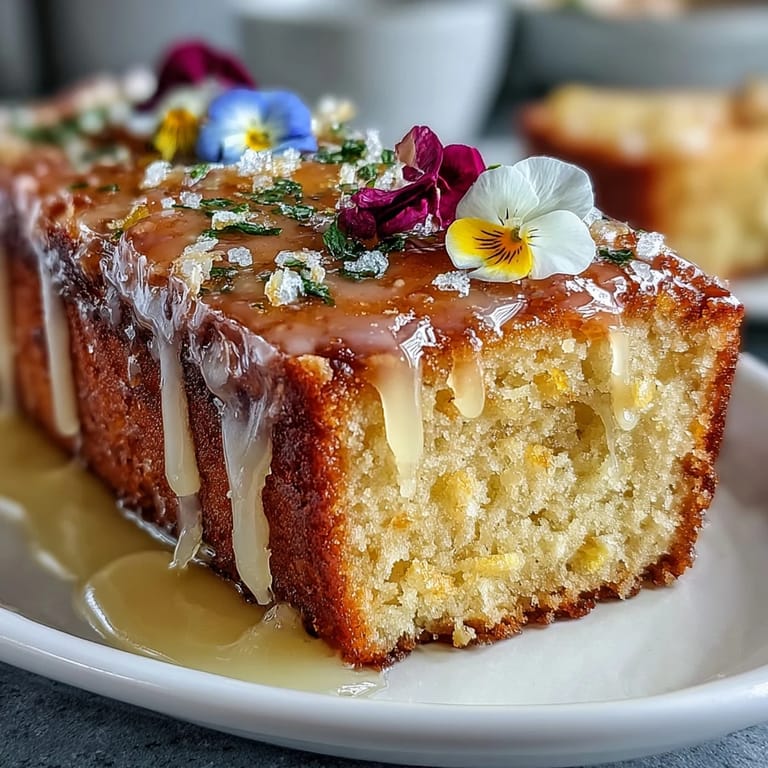
- Once the cake is baked but still warm in the tin, poke holes all over the top with a skewer, then slowly pour the glaze over the surface, letting it soak into every hole and crevice—this is where the magic happens.
- Cool and compose:
- Let the cake cool completely in the tin before turning it out onto a serving platter, which ensures the glaze sets properly and everything stays tender.
- Finish with flowers:
- Just before serving, dust lightly with extra icing sugar if you like and scatter your edible flowers across the top as if you're arranging them just for them.
 Save
Save I remember my aunt cutting into this cake at a family gathering and finding that perfect balance of moist crumb and zesty tang, then immediately asking for the recipe before she'd even swallowed her first bite. That's the moment I knew this wasn't just something to bake—it was something people genuinely wanted to recreate at home.
Why the Drizzle Makes All the Difference
The first time I skipped the drizzle (thinking I'd just serve it with icing instead), the cake was fine, pleasant even, but something fundamental was missing. When you poke those holes and pour the warm glaze in, the lemon flavor becomes part of the structure, not just a topping—every bite contains that perfect balance of sweet sponge and tart glaze that makes people say 'wow' without quite being able to explain why.
Choosing and Using Edible Flowers
The edible flower moment transforms this from a weekday cake into something that feels celebratory and thoughtful, which is exactly what Mother's Day deserves. I learned this the hard way by once buying 'decorative flowers' from a craft store and nearly serving them before realizing they'd been sprayed with preservatives—now I either grow my own pansies and violas in a dedicated pot, or source them from a trusted farmer's market or specialty food supplier where I can ask directly about pesticides.
Serving and Storage Suggestions
This cake keeps well for three days in an airtight container, staying moist thanks to the glaze, though honestly it rarely lasts that long once you've served it. Add a dollop of whipped cream or crème fraîche alongside, and you've got something that feels both comforting and sophisticated—the kind of cake people remember eating long after the occasion has passed.
- For extra brightness, add a pinch of lemon zest directly to your glaze before pouring it over the warm cake.
- If you're making this ahead, bake and glaze it the day before, then add the edible flowers just before serving to keep them fresh and vibrant.
- This cake freezes beautifully undecorated for up to a month, so you can have homemade elegance ready whenever you need it.
 Save
Save This cake has become my go-to for celebrating the people I love, not just on Mother's Day but whenever I need to say thank you through something warm and bright. It's proof that simple ingredients and genuine care are all you really need.
Recipe Questions & Answers
- → How do I ensure the lemon drizzle soaks evenly?
Poke small holes in the warm cake with a skewer before pouring the drizzle to allow the citrus syrup to penetrate deeply.
- → Can I use any edible flowers for decoration?
Choose pesticide-free, safe-to-eat flowers like violas, pansies, nasturtiums, or rose petals for both beauty and safety.
- → What is the best way to keep the cake moist?
Using softened butter and not overmixing the batter helps maintain a tender crumb. The lemon drizzle also adds moisture after baking.
- → Can this be adapted for gluten-free diets?
Substitute self-raising flour with a gluten-free blend plus a teaspoon of baking powder to achieve a similar texture.
- → How long does the cake stay fresh?
Stored in an airtight container at room temperature, it remains fresh for 2–3 days while retaining moistness.