 Save
Save Last summer, I was packing for an outdoor concert and realized I'd spent all morning chopping salad greens that were already turning brown by lunchtime. That's when it clicked—layer everything in a jar, dressing on the bottom, greens on top, and suddenly I had a salad that stayed fresh and crisp for hours. My friend Sarah grabbed one straight from my cooler, shook it up right there on the grass, and didn't stop raving about it for weeks. Now whenever someone mentions a picnic, this is what I make.
I made these for a work potluck on a sweltering August afternoon, and watching people unscrew those jars and shake them up became this oddly satisfying moment—like we all were kids opening something special. One colleague said it felt fancy enough for brunch but easy enough for camping, which perfectly captures why this salad stuck around in my rotation.
Ingredients
- Mixed salad greens (4 cups): Use a blend of arugula, spinach, and baby kale because they hold up better in jars than delicate lettuces—the different textures also keep things interesting.
- Strawberries (1 cup, hulled and sliced): Fresh berries bring sweetness and a bit of moisture that mingles with the dressing, so choose ones that feel firm and smell fragrant.
- Goat cheese (1/2 cup, crumbled): The tanginess cuts through the sweetness perfectly, and crumbling it by hand rather than pre-crumbled keeps the pieces chunky and creamy.
- Toasted pecans or walnuts (1/3 cup, roughly chopped): Toasting them yourself makes such a difference in flavor—even just five minutes in a dry skillet wakes them up.
- Red onion (1/2 small, thinly sliced): This adds a sharp bite that balances the berries and cheese, so don't skip it even if onions seem like an odd choice.
- Cucumber (1/2 cup, sliced): Cool, watery, and refreshing—it's the element that reminds you this is a salad and not just a cheese and nut situation.
- Extra-virgin olive oil (3 tablespoons): Quality matters here since the dressing is so simple; a good olive oil carries the whole flavor profile.
- Balsamic vinegar (1 tablespoon): The slight sweetness plays into the strawberries rather than fighting them, which is why balsamic is the right choice.
- Honey (1 teaspoon): A tiny bit of honey rounds out the dressing and helps it emulsify, so don't think you can skip it.
- Dijon mustard (1 teaspoon): This is the secret that makes the dressing taste complex and grown-up rather than flat and one-note.
- Salt and freshly ground black pepper: Taste as you go because even a small pinch changes whether everything comes together.
Tired of Takeout? 🥡
Get 10 meals you can make faster than delivery arrives. Seriously.
One email. No spam. Unsubscribe anytime.
Instructions
- Make the dressing first:
- Whisk olive oil, balsamic vinegar, honey, Dijon mustard, salt, and pepper in a small bowl until it looks glossy and emulsified. This takes maybe two minutes, and you'll know it's ready when the dressing coats the back of a spoon.
- Start with the dressing:
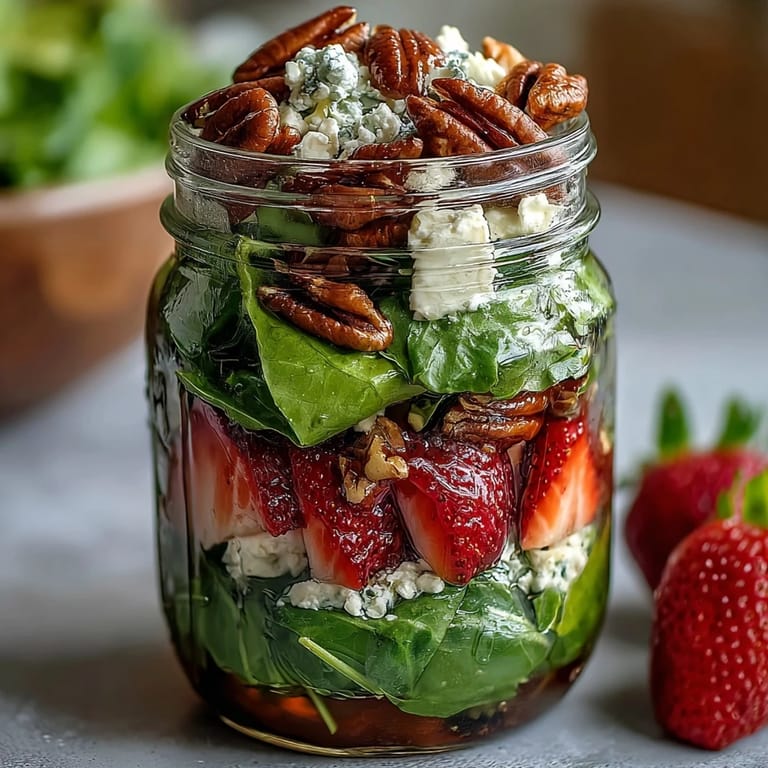
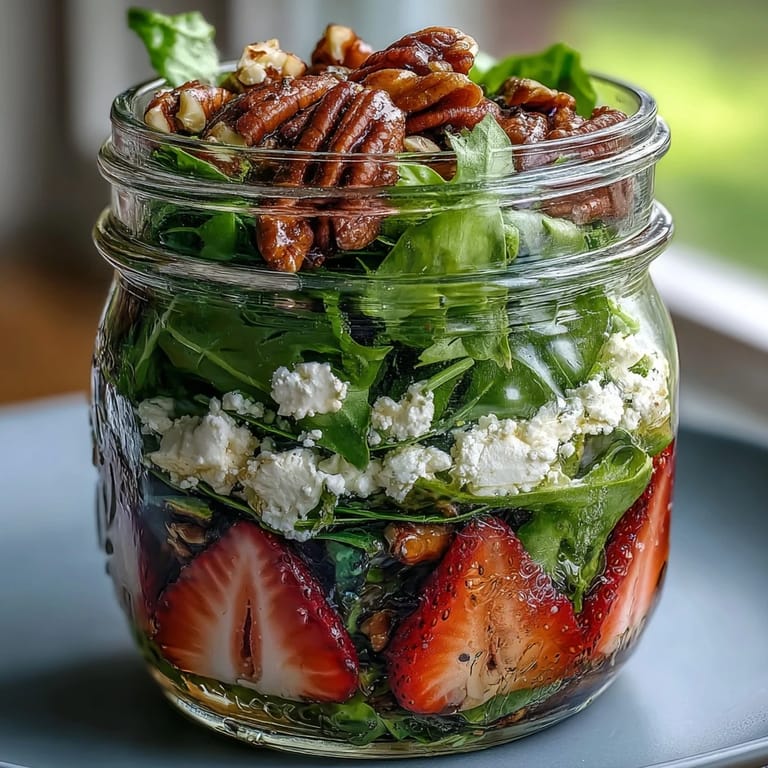
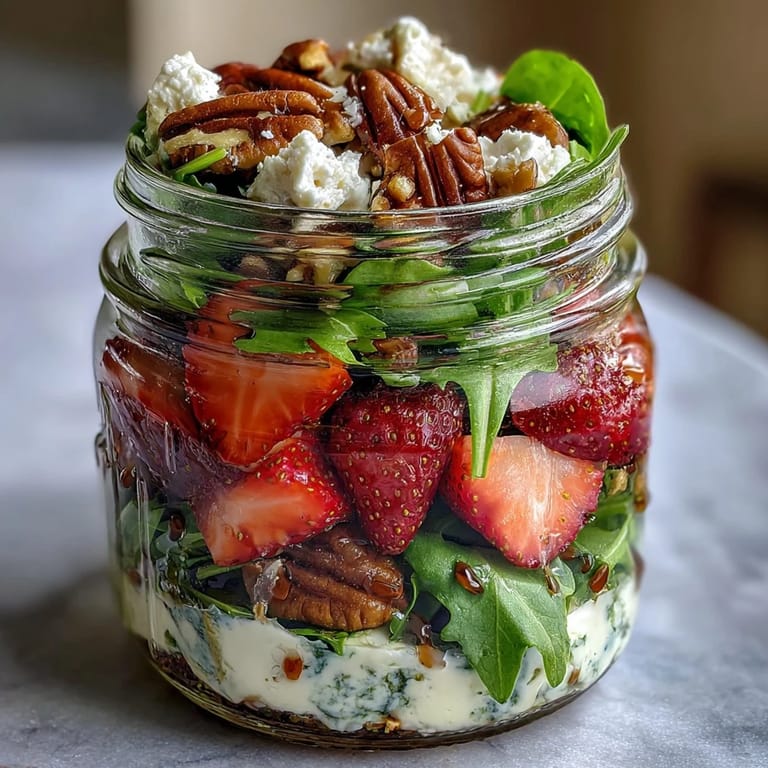
- Pour about one tablespoon of dressing into the bottom of each quart-sized jar—this is your flavor foundation and what keeps the greens from getting soggy. Mason jars work perfectly, but any jar with a tight-fitting lid will do.
- Layer the sturdy vegetables:
- Add the sliced red onion next, then cucumber slices, then strawberry slices on top. These middle layers create a buffer between the wet dressing and the delicate greens, and they're strong enough to sit in the dressing without falling apart.
- Add the cheese and nuts:
- Crumble the goat cheese over the strawberries and scatter the chopped nuts on top. At this point your jar is looking colorful and intentional, and you're almost done.
- Crown it with greens:
- Fill the jar to the top with mixed salad greens, packing them down gently but not too tight. This is your lid that keeps the dressing from soaking the delicate leaves too early.
- Seal and refrigerate:
- Screw the lid on tight and refrigerate until you're ready to eat, which can be anywhere from an hour to three days later. When hunger strikes, hold the jar firmly, shake it until the dressing coats everything, and eat straight from the jar or pour it into a bowl if you're feeling civilized.
 Save
Save My daughter took one of these to school and came home saying her friends kept asking what smelled so good—it was just strawberries and goat cheese, but in a jar it felt like I'd sent her something special instead of just another lunch. That's when I realized these aren't really about being convenient, though they absolutely are; they're about making someone feel thought about.
Timing and Storage
These salads are best assembled the night before or the morning of eating them, giving the flavors time to get acquainted without the greens getting too tired. You can make them up to three days ahead, but somewhere around day two the greens start to fade and the whole thing loses its crispness—so plan accordingly. I've found that keeping them in the coldest part of the fridge and shaking gently rather than aggressively helps them stay fresher longer.
Building Your Own Combinations
Once you understand the layering principle, you can swap ingredients without losing the magic—try dried cranberries instead of strawberries on a fall evening, or add pomegranate seeds for brightness in winter. The goat cheese is pretty essential because it adds both creaminess and tang, but you could use crumbled feta if that's what you have on hand. The nuts are your crunch variable, so walnuts, almonds, sunflower seeds, or even pumpkin seeds all work depending on what pairs with your fruit choice.
Making It a Meal
On their own these salads are light and refreshing, but if you want something more substantial, there are easy ways to turn them into lunch or dinner without changing what makes them special. Grilled chicken sliced thin can live in that middle layer right alongside the vegetables, or you could add canned chickpeas for vegetarian protein. Even leftover roasted vegetables fit beautifully, so think of this as a framework rather than a rulebook.
- Add grilled chicken, hard-boiled eggs, or chickpeas to make this a complete meal that actually fills you up.
- Sunflower seeds, pumpkin seeds, or even dairy-free cheese work if you're managing allergies or dietary preferences.
- Make a double batch on Sunday and you'll have grab-and-go lunch sorted for half the week.
 Save
Save These salads have become my go-to move for basically any situation where people are eating outside—picnics, hiking, concerts, camping—because they solve the practical problem of keeping food fresh while somehow making it feel like you put real thought into what people are eating. That combination of easy and intentional is hard to beat.
Recipe Questions & Answers
- → What nuts can I use as a substitute for pecans?
To accommodate allergies or preferences, walnuts or sunflower seeds provide great alternatives that maintain a crunchy texture and complement the salad's flavors.
- → How should I layer the salad ingredients in the jar?
Start with dressing at the bottom, followed by sliced red onion, cucumber, and strawberries. Next add goat cheese and nuts, then top with mixed salad greens to keep textures crisp.
- → Can this layered salad be prepared in advance?
Yes, assembling the layers in jars and refrigerating keeps ingredients fresh. Shake well before serving to distribute the dressing evenly.
- → Is this salad suitable for vegetarian diets?
This salad uses goat cheese and nuts, fitting vegetarian diets. For vegan adaptations, swap cheese with plant-based alternatives and honey with maple syrup.
- → What beverages pair well with this salad?
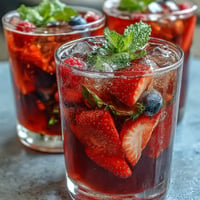
Light, refreshing drinks like chilled rosé wine or sparkling water with lemon perfectly complement the crunchy greens and fruity notes.