 Save
Save There's something wonderfully forgiving about stuffed shells—they're the kind of dish you can make half-asleep on a Sunday afternoon and still impress someone. I discovered this version years ago while trying to recreate a meal from a small trattoria outside Milan, except I was in my tiny apartment kitchen with whatever cheese I had on hand. The beauty of it is that it doesn't judge you for substitutions or slight timing mishaps; it just comes out of the oven golden and bubbling, ready to feed whoever's hungry.
I remember bringing this to a dinner party where someone's grandmother was visiting from Naples, and I was genuinely nervous—like, what does she know that I don't? But she went back for seconds and asked about the nutmeg, which felt like a small victory. That's when I learned that the most Italian thing you can do is cook with confidence, even if you're slightly making it up as you go.
Ingredients
- Jumbo pasta shells (conchiglioni): Look for ones that are substantial enough to hold filling without tearing—the thick ones are worth the hunt, and cooking them just under al dente gives you that perfect tender-but-still-textured bite.
- Ricotta cheese: Use whole milk ricotta if you can find it; the difference is real, and it makes the filling taste creamy rather than chalky.
- Frozen spinach: Thaw it completely and squeeze out every last bit of moisture—this is the difference between a filling that's velvety and one that's watery and disappointing.
- Parmesan cheese: Freshly grated is non-negotiable here; the pre-grated stuff has anti-caking agents that make the filling gritty.
- Egg: This binds everything together and keeps the filling from separating in the heat.
- Garlic and nutmeg: Go light on both—nutmeg especially can overpower quickly, but even a small amount transforms the filling from basic to something people will ask about.
- Tomato passata: If you can't find passata, crushed tomatoes work, though the texture will be slightly chunkier and that's perfectly fine.
- Olive oil: Use good olive oil for sautéing the sauce base; it genuinely tastes different and costs barely more.
- Mozzarella cheese: Shredded low-moisture mozzarella melts more evenly than fresh; save the fresh stuff for salads.
Tired of Takeout? 🥡
Get 10 meals you can make faster than delivery arrives. Seriously.
One email. No spam. Unsubscribe anytime.
Instructions
- Get your oven ready:
- Preheat to 180°C (350°F) so it's waiting for you when you need it.
- Cook the shells perfectly:
- Boil them in heavily salted water until they're about two minutes short of the package instructions—they'll finish cooking in the oven and you want them to hold their shape. Drain and lay them out on a clean tray so they don't weld together while cooling.
- Make the creamy filling:
- In a bowl, combine ricotta, the squeezed-dry spinach, Parmesan, egg, minced garlic, a whisper of nutmeg, salt, and pepper. Mix until it's completely smooth with no streaks of unmixed ricotta—this takes maybe a minute of stirring.
- Build your sauce:
- Warm olive oil in a saucepan and sauté the finely chopped onion until it's soft and slightly translucent, about three minutes. Add minced garlic, let it become fragrant for a minute, then pour in your tomato passata along with oregano and basil. Let it simmer gently for ten to fifteen minutes while you assemble everything else—the sauce should taste like concentrated tomato comfort.
- Layer the foundation:
- Spread half of the tomato sauce across the bottom of your baking dish; this prevents sticking and creates a flavorful base.
- Stuff and arrange:
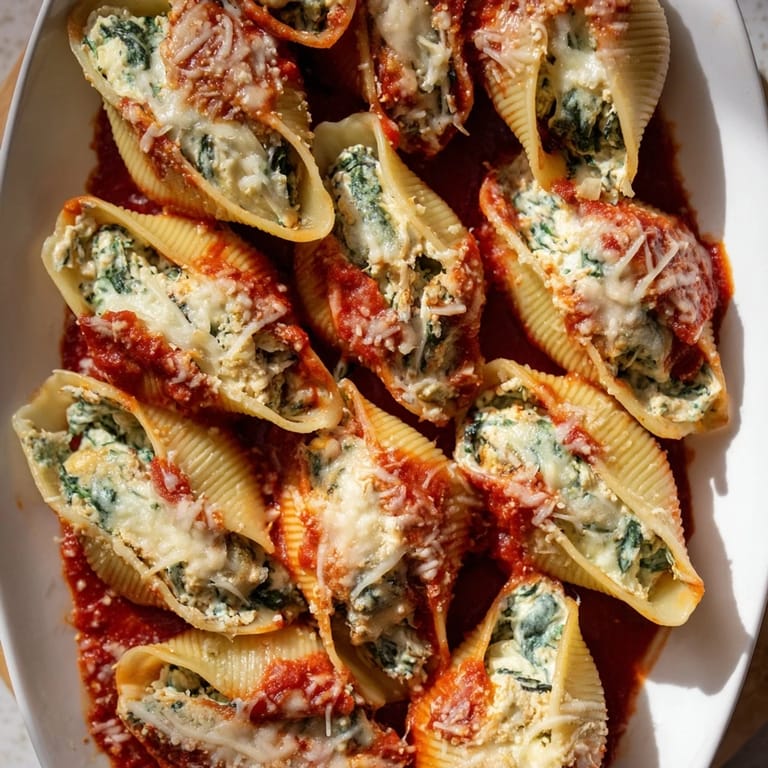
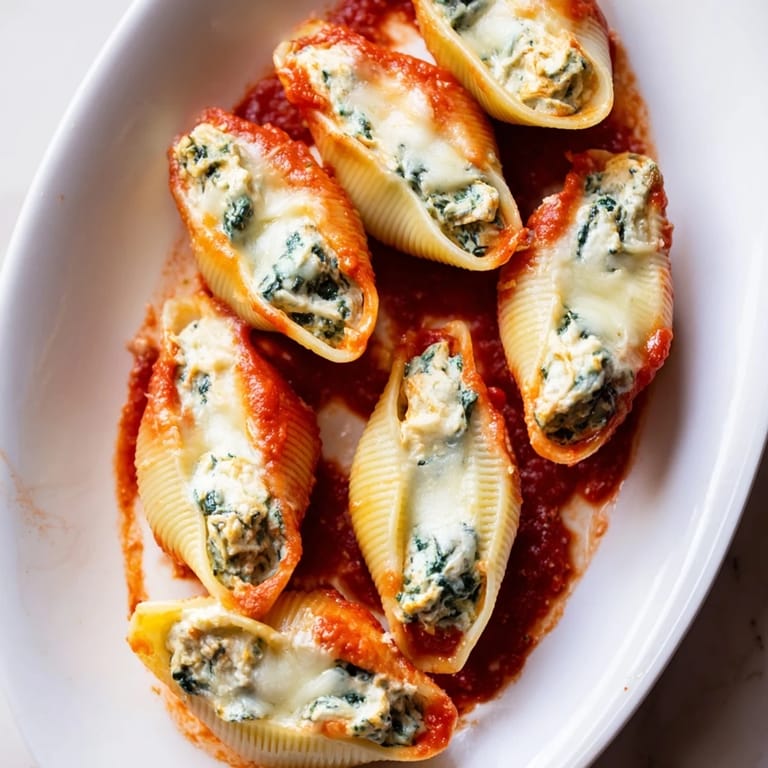
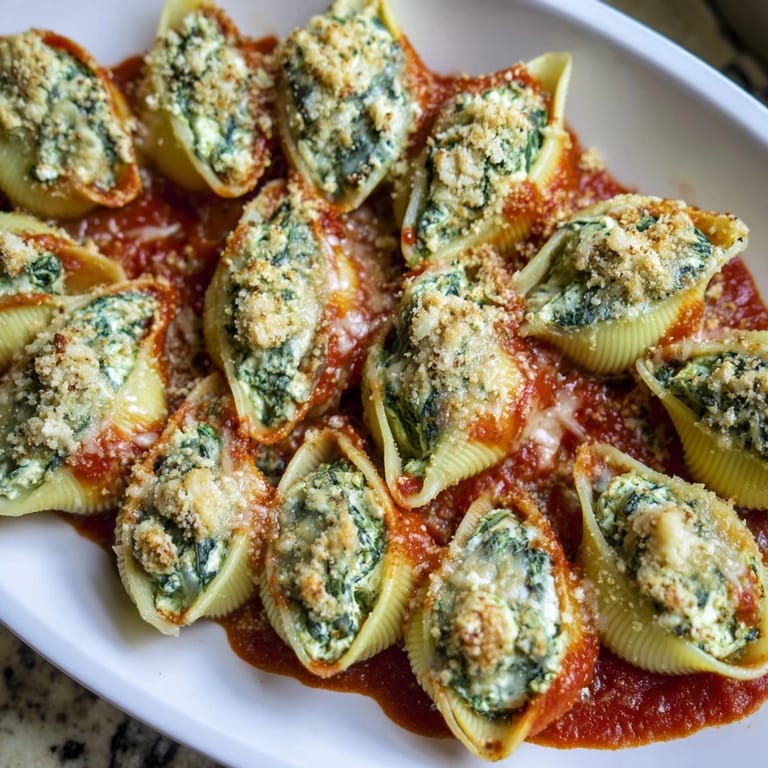
- Spoon about one and a half to two tablespoons of ricotta filling into each shell and nestle them into the dish, open-side up, in rows. It's okay if they're snug against each other.
- Top with sauce and cheese:
- Spoon the remaining sauce over the shells so each one gets coverage, then scatter mozzarella and the final bit of Parmesan across the top—don't be shy.
- First bake with cover:
- Cover the dish with foil and bake for twenty-five minutes so the filling heats through gently and nothing burns on top.
- Finish with the golden crust:
- Remove the foil and bake another ten to fifteen minutes until the cheese bubbles at the edges and turns golden brown in spots. This is what makes it look restaurant-worthy.
- Let it rest:
- Give it five minutes before serving so everything sets slightly and doesn't immediately collapse onto the plate.
 Save
Save There was a night I made this dish for someone who was going through a rough time, and they ate in almost complete silence—the good kind of silence, the kind where food is doing what food does best. That's when I realized this isn't fancy or complicated, it's just honest, and there's something powerful in that.
What Makes This Different
The nutmeg is the secret weapon here—it's barely perceptible, but it rounds out the spinach and ricotta in a way that makes people pause mid-bite and wonder what they're tasting. Some recipes skip it entirely, which is a missed opportunity. The other thing is the gentle, long simmer of the sauce before assembly; rushing this step means your sauce tastes raw or sharp instead of deep and rounded.
Wine Pairing and Serving
This dish sings alongside a light Italian red like Chianti or even a crisp Vermentino white if you prefer lighter wines. Serve it with warm, crusty bread to soak up the sauce, and maybe a simple green salad dressed with lemon and olive oil. The dish is hearty enough that you don't need much else—sometimes the simplest meals are the most complete.
Variations and Swaps
You can swap part of the ricotta for cottage cheese if you want a lighter texture, or add a pinch of red pepper flakes to the sauce for subtle heat. Fresh herbs like basil or parsley stirred into the filling at the end add brightness. Some people add a handful of pine nuts to the ricotta for texture, and I've even seen versions with roasted vegetables mixed in. The framework is flexible enough that you can make it your own without losing the identity of the dish.
- A tiny pinch of red pepper flakes in the sauce adds depth without heat.
- Leftovers reheat beautifully at 160°C (320°F) covered with foil for about fifteen minutes.
- This freezes exceptionally well before baking, so make a double batch if you're thinking ahead.
 Save
Save This is the kind of recipe that gets better the more you make it, not because it needs fixing, but because you learn where your oven runs hot, how you like the ricotta seasoned, and when your particular mozzarella melts best. Cook it once and you'll know exactly how to cook it again.
Recipe Questions & Answers
- → How can I prevent jumbo shells from breaking during boiling?
Boil the pasta shells in plenty of salted water and stir gently to avoid sticking. Cook them al dente, usually about 2 minutes less than package instructions, to keep them firm and easier to fill.
- → Can I substitute fresh spinach for frozen in the filling?
Yes, fresh spinach should be wilted, chopped finely, and squeezed to remove excess moisture before combining with the ricotta mixture.
- → What is the best way to make the tomato sauce rich in flavor?
Sauté finely chopped onion and garlic in olive oil before adding tomatoes and herbs. Let the sauce simmer gently for 10-15 minutes to develop depth.
- → How long should the stuffed shells rest after baking?
Allow the dish to rest for about 5 minutes after baking. This helps the filling set and makes serving easier without losing the melted cheese texture.
- → What cheeses are used in the filling and topping?
The filling combines ricotta and grated Parmesan cheese, while the topping has shredded mozzarella and additional Parmesan for extra flavor and a golden crust.